What OmniFocus is actually good at
OmniFocus is the most complete task system on the Mac, and the only mainstream one that takes ordering seriously. A project can be sequential, which means only its first unfinished action is available and everything behind it stays out of your way until it is reachable. Defer dates hide work that cannot start yet. Perspectives, on Pro, let you build the exact filtered view your week needs. Review cycles put every project back in front of you on a schedule. It captures from anywhere, syncs through Omni's own server, and automates through AppleScript and Omni Automation.
Pricing is $74.99 for a Standard perpetual license, $149.99 for Pro, or $99.99 a year for a subscription that includes Pro everywhere plus the web app. There is a 14-day trial and a 30-day money-back guarantee.
If you run a real GTD practice, none of the alternatives below replaces that, and you should buy it. What follows is for the much larger group who bought it, used a tenth of it, and are now looking for something they will actually open.
Why people go looking anyway
The price is a decision. $74.99 before you know whether the system fits is a lot for software you might abandon in March.
The ceremony outlives the motivation. Contexts, defer dates, flags, reviews: each is useful and each is a small tax, and the system stops working the week you stop paying it. Half-maintained GTD is worse than no system, because now the list is lying to you.
The list still does not answer the question. Even a well-kept OmniFocus tells you what is available, and available is not the same as next. Thirty available actions is the same paralysis as thirty flat ones, and this is the specific failure that sends people looking.
The cheaper end of the same idea
Things 3 is $49.99 once on the Mac, macOS 13.3 or later, with no in-app purchases and a 15-day trial from Cultured Code's own site. The iPhone and iPad apps are sold separately. It is the usual and correct recommendation for someone leaving OmniFocus: the same Apple-native quality, a calendar-aware Today view, and far less machinery. What it does not have is dependencies. A project is a list, and the order is whatever you remember.
Todoist and TickTick are the cross-platform answers, both freemium with a subscription for the useful tier. Take them if you share lists with other people or live on Windows and Android as well.
Reminders is free, already installed, syncs across your devices and now handles sections and tags. For a lot of people it is genuinely enough, and it is worth an honest week before spending anything.
None of the four models what has to happen before what. That is the gap.
When the problem is order, not capture
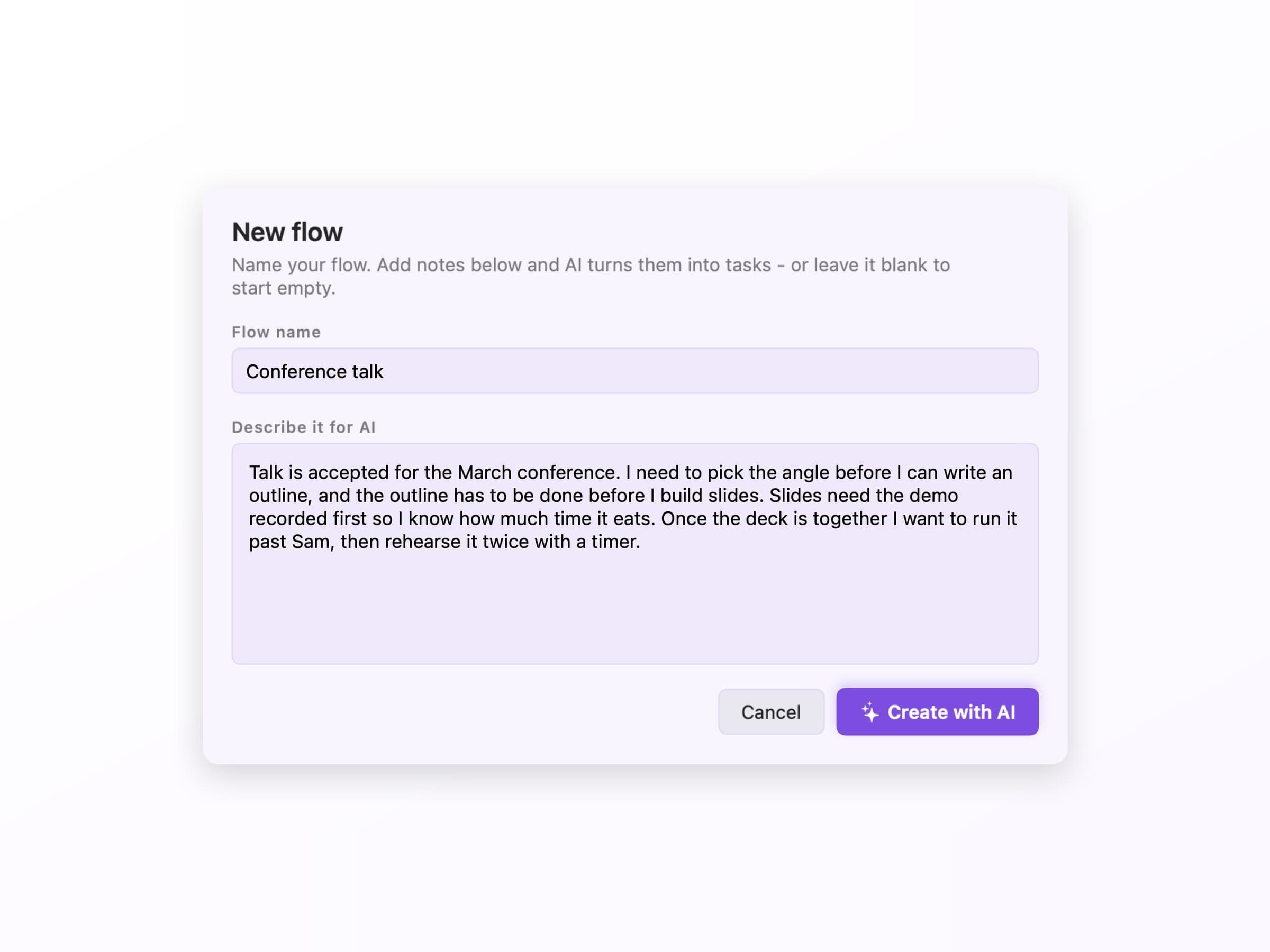
Plexus is not a to-do app and does not pretend to be. There is no inbox ritual, no review cycle, no contexts. It does one thing OmniFocus does with defer dates and sequential projects, and does it visually: it holds what depends on what.
You paste the paragraph you already wrote - a brief, a meeting note, a message to yourself - and Apple's on-device model pulls the tasks out of it, names the flow and wires the order it can infer. Talk before outline, outline before slides, demo recorded before the slides that describe it.
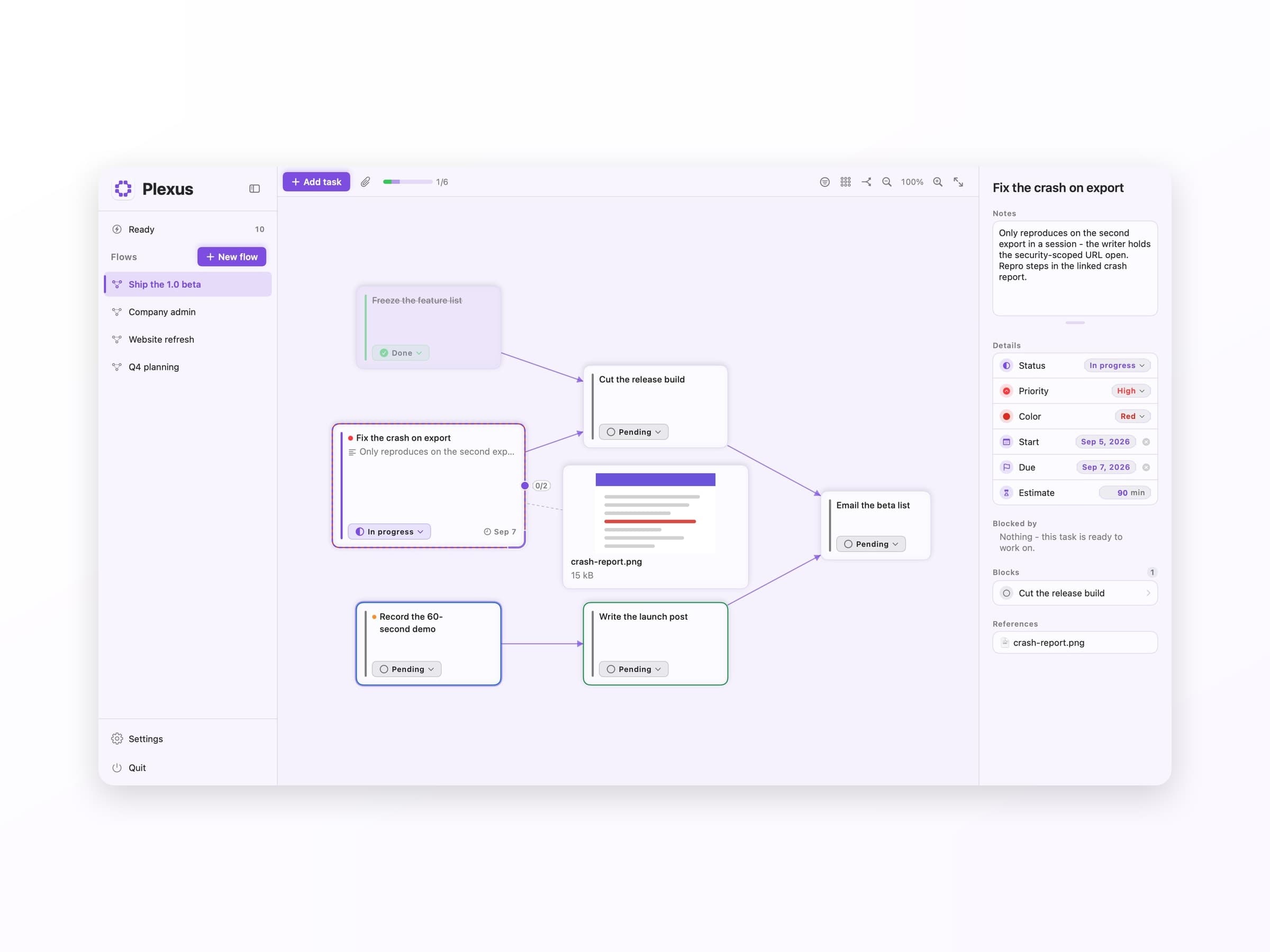
After that the canvas answers the only question that matters on a Monday: which of these can I actually start. A task is next-actionable when every prerequisite and every subtask is finished, and those are the ones highlighted. Links you draw by hand are never overwritten by a later analysis, and a wiring that would create a cycle is refused rather than accepted quietly.
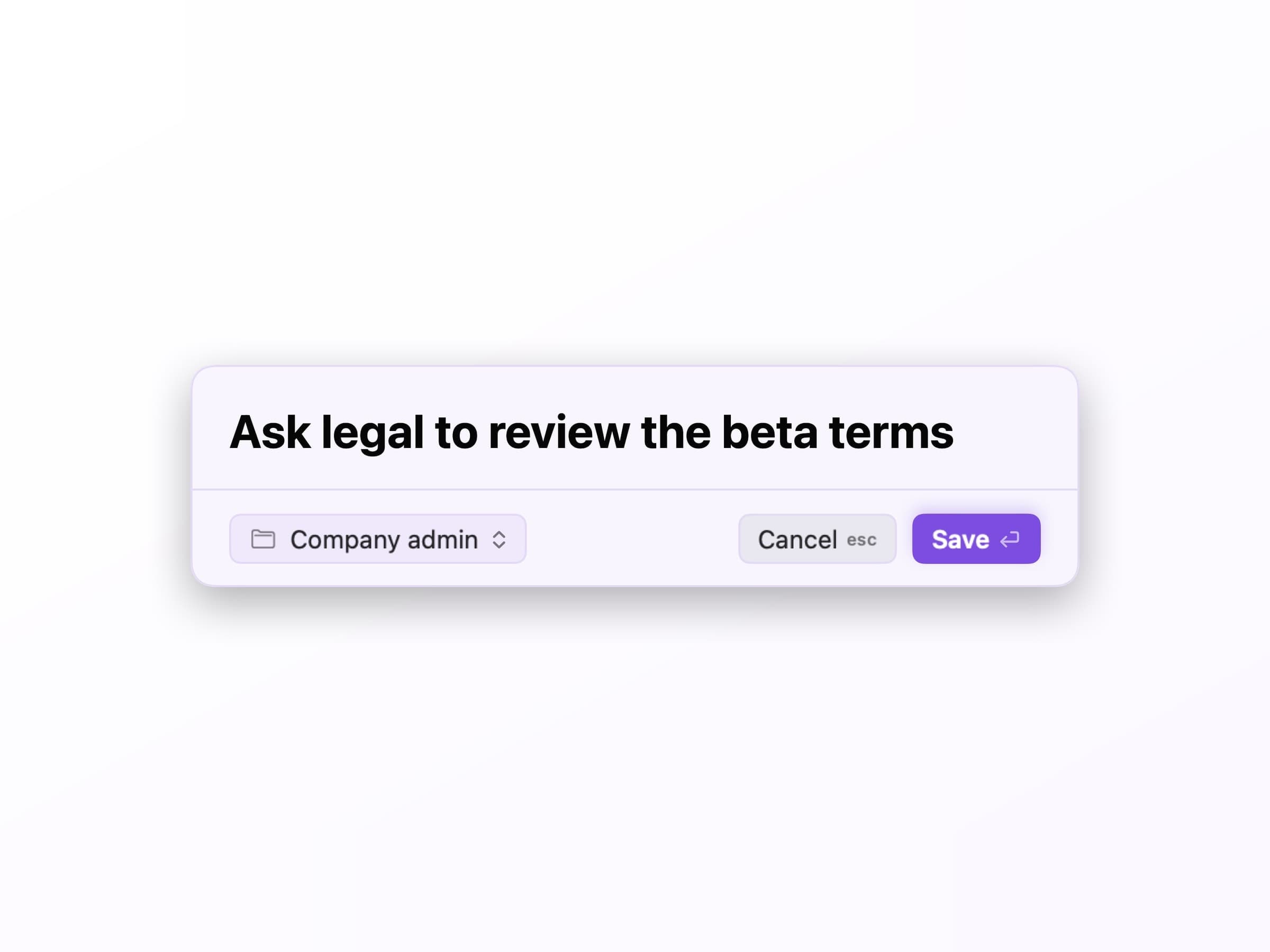
A global shortcut files a line into the right flow without opening the app, and any flow exports as nested Markdown with the dependencies inline.
Where OmniFocus has Forecast, Plexus has Ready and Plan my day: Ready is every startable task across every flow in one list, and Plan my day takes the hours you say you have and fits today's work into them, in order, with a line where the time runs out.
The constraints are real and you should weigh them before buying. The app needs macOS 26, because that is what Apple's Foundation Models require; the build itself is universal, and on a Mac where Apple Intelligence is unavailable or switched off it runs in a fully functional manual mode and says so in a banner. There is no sync and no iPhone app. It does not write to Calendar or Reminders, and it has no assignees or comments, so it is a single-person tool. In exchange the analysis runs on your Mac: the app makes no network calls of its own beyond licensing, updates and anonymous counts, which is the difference between pasting a client brief into this and pasting it into a website.
Plexus is $10.99 once with a 30-day trial that needs no card and no email, and the mechanism is covered feature by feature in turning notes into tasks on a Mac.
Where the alternatives win
OmniFocus wins on being a whole system: capture from every device, sync you can trust, review as a habit, perspectives, and automation deep enough to build your own workflow on. Nothing here approaches it, and its sequential projects solve the ordering problem too, just as a hidden list rather than a picture.
Things 3 wins on the daily experience. It is the nicest of these to open every morning, and $49.99 once for a Mac app of that quality is fair.
Todoist and TickTick win on other people and other platforms. Shared projects, comments, assignees, and an Android phone.
Reminders wins on cost and on being everywhere already.
And all four win on the phone, which Plexus does not have and will not pretend to. If you capture in queues and on trains, that matters more than any of the above.
Side by side
| Tool | Models dependencies | Sync and phone | Automation | Cost |
|---|---|---|---|---|
| OmniFocus 4 | Yes, sequential projects and defer dates | Yes, Omni Sync | AppleScript, Omni Automation | $74.99 once, Pro $149.99, or $99.99/yr |
| Things 3 | No | Yes, Things Cloud, apps sold separately | URL scheme | $49.99 once on Mac |
| Todoist, TickTick | No | Yes | Integrations | Freemium subscription |
| Reminders | No | Yes, iCloud | Shortcuts | Free |
| Plexus | Yes, as a graph you can see | No | Markdown export | $10.99 once |
If your problem is that things get forgotten, buy a task manager, and the good ones are above. If your problem is that nothing gets forgotten and you still cannot tell what to start, that is a different piece of software, and it costs a tenth as much.
The two pair better than they compete: keep the backlog wherever it lives, put today's one commitment in Anchored's menu bar, and find out afterwards where the hours went with Tally. Both are pay what you want, zero included.
Prices and features checked on 5 September 2026.


